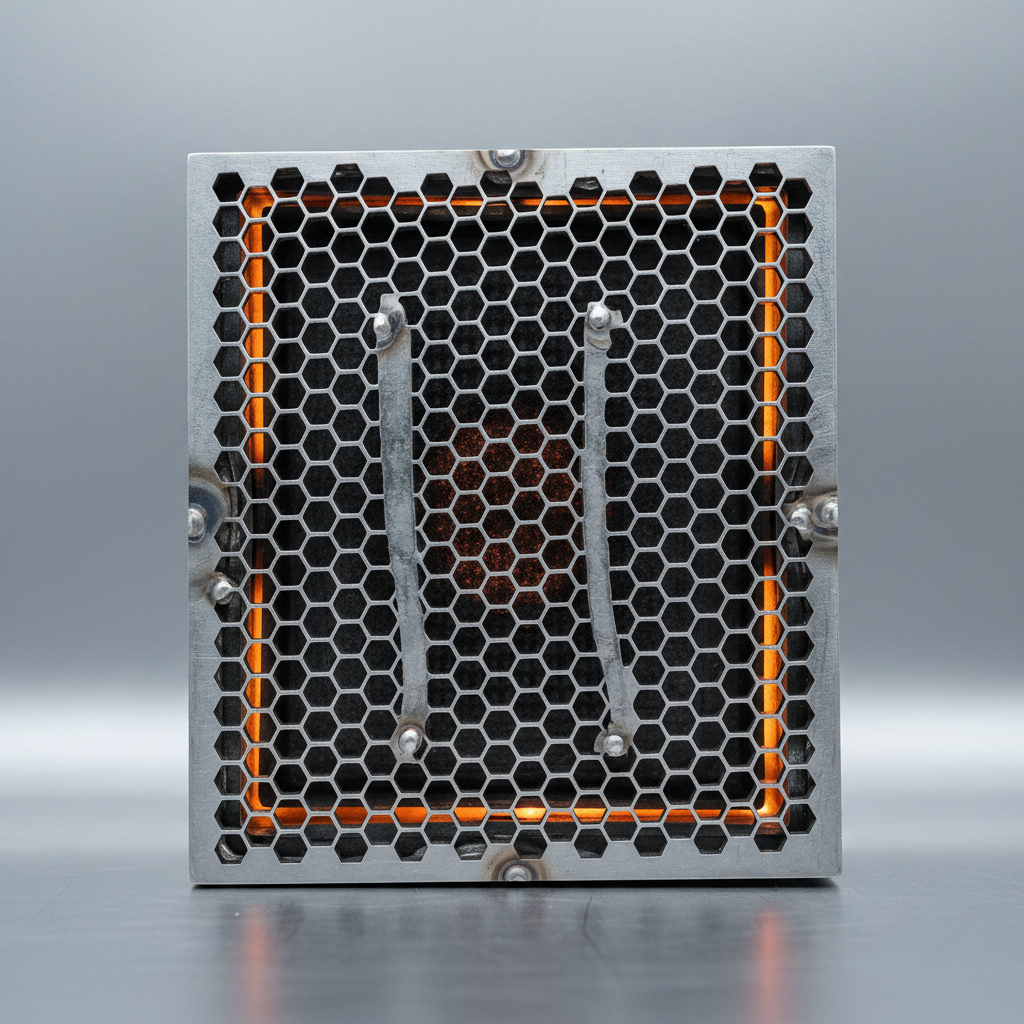


Achieving laminar flow in high-precision wind tunnels or industrial ventilation systems often requires more than just a fan; it necessitates a precise geometric intervention. Engineers frequently seek a custom airflow straightener datasheet to determine how specific cell sizes and materials impact the turbulence intensity and pressure drop of a given system.
Airflow straighteners, particularly those utilizing honeycomb structures, function by breaking down large-scale eddies into smaller, dissipative vortices. This process is critical for ensuring that downstream measurements in aerospace testing or chemical processing are not skewed by erratic air currents, making the selection of the correct honeycomb core essential for operational accuracy.
When evaluating technical specifications, the balance between flow straightening efficiency and the resulting parasitic pressure loss is the primary engineering trade-off. Understanding these variables allows procurement teams to move beyond generic components toward tailored solutions that optimize energy consumption and system reliability.

The Technical Role of Honeycomb in Flow Conditioning

At its core, a flow straightener is designed to eliminate swirl and reduce turbulence. In the metal honeycomb industry, this is achieved by creating a series of parallel channels that force the air to move in a linear direction. The effectiveness of this process is heavily dependent on the L/D ratio—the ratio of the cell length to the cell diameter.
When air enters a honeycomb core, the walls of the hexagonal cells constrain the lateral movement of the fluid. This geometric constraint transforms turbulent, swirling flow into a more uniform, unidirectional stream. For high-precision environments like wind tunnels, the uniformity of this flow is the difference between a valid experiment and unusable data.
Manufacturers like Hengshi Honeycomb leverage precision stamping and brazing technologies to ensure that these cells are perfectly aligned. Any deviation in the cell wall thickness or alignment can introduce new turbulence, which is why a detailed datasheet is required to verify the tolerances of the manufacturing process.
Critical Parameters for Airflow Straightener Specification
Defining a custom airflow straightener requires a deep dive into several interdependent variables. The first is the cell size, which typically ranges from 0.8mm to 30mm. Smaller cells generally provide better straightening capabilities but increase the resistance to flow, thereby increasing the energy required to move the air.
Material selection is the second pillar of specification. Depending on the environment, engineers may choose aluminum for lightweight applications or stainless steel (304, 316, 316L) for corrosion resistance and high-temperature stability. In extreme aerospace or power generation contexts, alloys like Inconel are utilized to withstand mechanical stress and oxidation.
Finally, the core depth (length) determines the residence time of the air within the straightener. A deeper core typically yields a more stable flow profile but adds weight and increases the overall system footprint. This makes the datasheet the primary document for balancing these competing physical requirements.
Industrial Applications of Custom Flow Straighteners
The application of honeycomb flow straighteners extends far beyond simple ventilation. In wind tunnel testing, they are indispensable for creating the "quiet" air required to simulate real-world flight conditions on aircraft models, where even minor swirls can lead to inaccurate lift and drag coefficients.
In the energy sector, specifically within gas and steam turbines, honeycomb segment seals and straighteners are used to control gas flow and minimize leakage. By optimizing the aerodynamics of the gas path, these components improve fuel efficiency and reduce the mechanical wear on rotating components caused by turbulent buffeting.
Additionally, in industrial HVAC and cleanroom environments, flow straighteners are employed to ensure that air is distributed evenly across a space. This prevents "dead zones" where contaminants could accumulate, ensuring that the ventilation system meets strict health and safety standards for pharmaceutical or semiconductor manufacturing.
Analyzing Pressure Drop vs. Straightening Efficiency
A critical evaluation of any flow straightener involves plotting the relationship between the turbulence reduction (straightening efficiency) and the pressure drop. An ideal solution provides a steep increase in flow uniformity with only a marginal increase in the pressure required to push the air through the core.
When comparing standard off-the-shelf honeycombs to custom-engineered straighteners, the difference lies in the optimization of the cell geometry. Custom solutions allow for the adjustment of wall thickness and cell diameter to match the specific Reynolds number of the application, significantly reducing energy waste.
custom airflow straightener datasheet Performance Metrics
As shown in the comparison, custom-tuned straighteners can achieve higher uniformity indices while maintaining a lower pressure drop compared to generic cores. This efficiency gain directly translates to lower operational costs for the blower or compressor driving the system.
Procurement Framework for High-Performance Honeycomb Cores
Procuring a flow straightener is not a simple purchase but a technical collaboration. The buyer must provide a clear set of boundary conditions: the input velocity of the air, the acceptable percentage of turbulence at the output, and the maximum allowable pressure drop.
Verification of the manufacturer's capability is the next step. A supplier should be able to provide evidence of their brazing technology and stamping precision. For instance, the ability to produce a wide range of cell sizes (from 0.8mm to 30mm) indicates a versatile production line capable of handling diverse industrial requirements.
Finally, consider the total cost of ownership. While a stainless steel core may have a higher initial price than aluminum, its resistance to corrosion and oxidation in harsh environments can significantly reduce the frequency of replacements, lowering the long-term maintenance budget.
Material Innovations in Metal Honeycomb Manufacturing
The evolution of flow straighteners is closely tied to advances in material science. Traditional aluminum honeycombs are being supplemented by high-performance alloys. The use of vacuum brazing furnaces allows for stronger joints between cell walls, ensuring that the structure does not deform under high-pressure differentials.
Recent trends indicate a move toward hybrid structures, where different cell sizes are layered to create a graded transition in flow. This approach can further reduce the initial pressure shock as air enters the straightener, potentially increasing the overall system efficiency by reducing flow separation at the inlet.
Furthermore, the integration of EMI shielding properties into honeycomb vents allows a single component to serve dual purposes: providing necessary ventilation and airflow straightening while simultaneously blocking electromagnetic interference, a critical requirement for modern electronics enclosures.
Comparison of Straightening Technologies for Selection
Choosing the right flow conditioning technology depends on the specific goals of the project. While honeycomb cores are the industry standard for high-efficiency straightening, other options like perforated plates or screen meshes are sometimes used for simpler applications.
The following table provides a comparative analysis of different flow conditioning approaches based on technical and operational dimensions, helping engineers make an informed decision based on their specific project constraints.
| Technology Type | Straightening Power | Pressure Drop | Primary Use Case |
|---|---|---|---|
| Honeycomb Core | Very High | Moderate | Precision Wind Tunnels |
| Perforated Plate | Low | Low | Basic HVAC Diffusion |
| Wire Mesh Screen | Moderate | High | Particulate Filtration |
| Graded Honeycomb | Excellent | Optimized | High-Velocity Aerospace |
| Custom Segmented | High | Moderate | Turbine Gas Paths |
| Vane Straighteners | High | Moderate | Large Ducting Swirl |
Ultimately, for applications requiring the highest degree of flow uniformity and controlled pressure loss, the honeycomb structure remains the superior choice due to its high strength-to-weight ratio and precise geometric consistency.
Frequently Asked Questions
Conclusion
The implementation of high-precision flow conditioning is a cornerstone of efficient aerospace, energy, and industrial design. By focusing on the technical nuances found in a custom airflow straightener datasheet, engineers can eliminate the guesswork and implement solutions that precisely balance flow quality with energy efficiency.
For organizations evaluating flow conditioning options, the selection of a manufacturer with deep expertise in metal honeycomb brazing and precision stamping is critical. Readers seeking detailed product specifications or tailored engineering solutions can review the relevant information available through www.hengshihoneycomb.com.