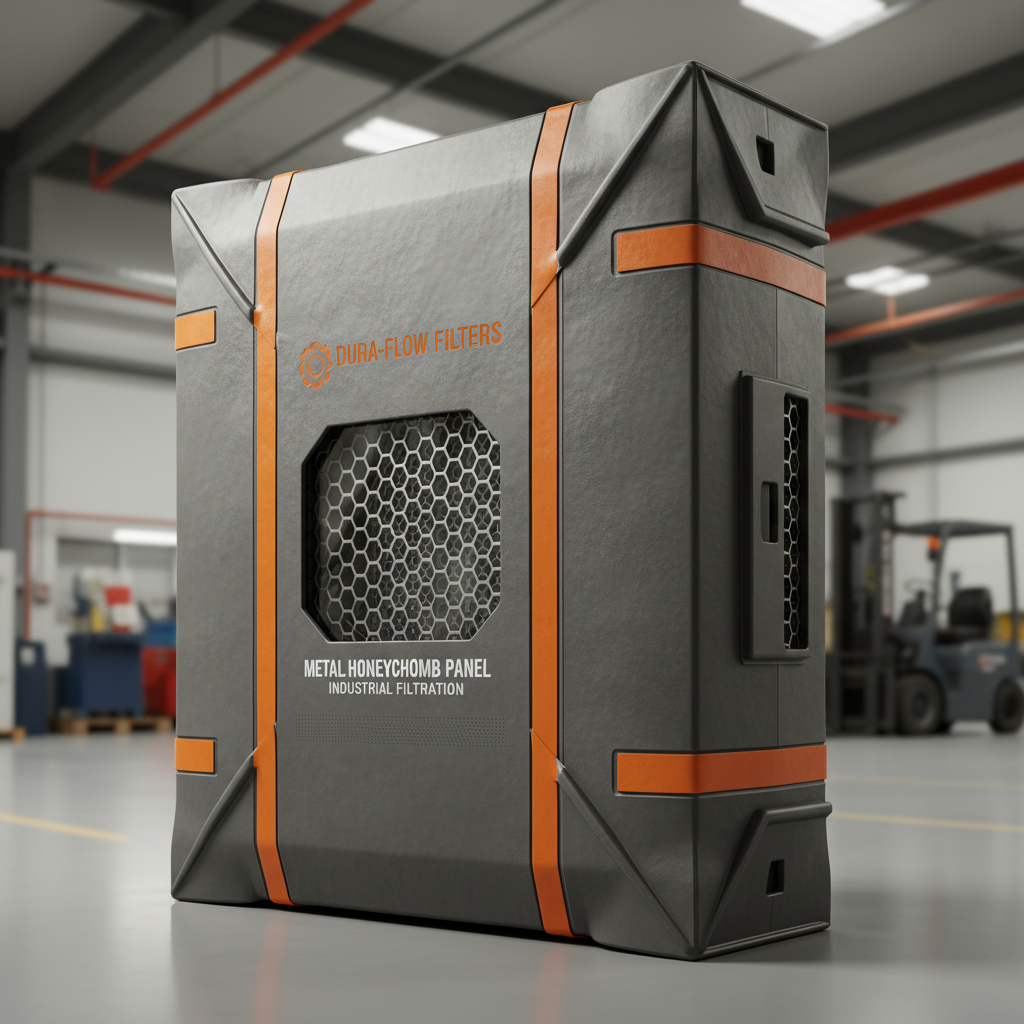


In high-precision aerodynamic testing, the transition from turbulent to laminar flow is a critical engineering hurdle. Engineers frequently rely on a custom air flow straightener datasheet to determine if a honeycomb structure can effectively eliminate vortices and stabilize air streams before they reach a test model.
The complexity of wind tunnel design means that generic solutions often fail to meet the strict uniformity requirements of aerospace research. When airflow is not perfectly rectified, the resulting turbulence introduces noise into the data, potentially leading to flawed aircraft wing designs or inefficient rocket nozzle configurations.
This technical analysis examines the critical parameters of honeycomb air straighteners, how to interpret their technical specifications, and the engineering trade-offs involved in material selection for extreme testing environments.


Air flow straighteners utilize a hexagonal honeycomb geometry to force air into parallel paths. This physical constraint eliminates lateral velocity components and breaks down large-scale turbulent eddies into smaller, dissipative structures.
The efficiency of this rectification depends on the cell aspect ratio—the relationship between the cell diameter and the core thickness. A higher ratio typically ensures better straightening but increases the pressure drop across the module.
When analyzing a technical datasheet, the cell size is the primary variable. For high-precision wind tunnels, cell sizes often range from 0.8mm to 12mm. Smaller cells provide superior turbulence reduction but are more prone to clogging and higher flow resistance.
Pressure drop (ΔP) is the critical trade-off in flow conditioning. A straightener that creates perfect laminar flow but introduces excessive pressure loss can destabilize the wind tunnel's drive system or require significantly more power to maintain test velocities.
Cell wall thickness and material grade determine the structural integrity. In supersonic or high-pressure tests, the honeycomb must resist deformation under intense aerodynamic loads, making the choice between aluminum alloys and stainless steel (such as 304 or 316L) a matter of structural safety.
Aerospace applications demand materials that balance a high strength-to-weight ratio with extreme environmental resistance. Aluminum is the industry standard for lightweight requirements, while stainless steel is deployed in corrosive or high-temperature zones.
Beyond strength, corrosion resistance is vital for tunnels exposed to humidity or salt-spray simulations. The use of 316L stainless steel provides the necessary chemical stability, ensuring that the flow straightener does not degrade and introduce particulates into the airflow.
Evaluating the effectiveness of a flow straightener involves assessing the ratio of turbulence intensity reduction against the increase in flow resistance. Engineering teams use normalized scores to compare different honeycomb configurations.
The following assessment illustrates the relative performance of various honeycomb configurations based on typical aerospace engineering requirements for stability and flow quality.
Deploying a honeycomb straightener requires precise integration with the wind tunnel's settling chamber. Improper mounting can create gaps that allow "bypass flow," where air skirts around the honeycomb, re-introducing turbulence and defeating the purpose of the rectification system.
In spacecraft and rocket testing, these components are often installed in modular arrays. This allows engineers to swap out modules for different cell configurations depending on whether the test focuses on low-speed stability or high-velocity shockwave analysis.
The industry is moving toward hybrid flow conditioning, combining honeycomb straighteners with high-porosity screens. This multi-stage approach targets a wider spectrum of turbulence scales, allowing for even lower turbulence intensities.
R&D is also focusing on additive manufacturing for non-uniform cell geometries. By varying the cell size across the diameter of the straightener, engineers may be able to compensate for boundary layer effects near the tunnel walls more effectively than with standard uniform cores.
Additionally, there is an increasing demand for "smart" monitoring, where pressure sensors are integrated directly into the straightener housing to provide real-time data on the condition of the honeycomb core and detect early signs of fouling.
Choosing the right air straightener requires a systematic evaluation of the test environment. Procurement teams should not look for a "best" product, but rather the most compatible configuration for their specific Reynolds number and flow velocity.
Key considerations include the target turbulence intensity, the maximum allowable pressure drop, and the chemical environment of the test medium. Custom dimensions are often necessary to fit proprietary tunnel architectures.
The following matrix provides a general guide for matching honeycomb configurations to specific industrial and research application profiles.
| Configuration Profile | Primary Material | Flow Characteristic | Recommended Use Case |
|---|---|---|---|
| Basic Configuration | Aluminum | Low Pressure Drop | General HVAC/Ventilation |
| Standard Rectifier | Aluminum | Balanced Laminar | Commercial Wind Tunnels |
| Precision Aero | Alu/Stainless | Ultra-Low Turbulence | Aerodynamic Research |
| High-Duty Steel | Stainless Steel | High Pressure Stability | Supersonic Testing |
| Corrosion Resistant | SS 316L | Chemical Stability | Marine/Salt-Spray Labs |
| Custom High-Precision | Custom Alloy | Tailored Velocity Profile | Spacecraft Simulation |
The most critical indicators are the cell size (diameter), the core thickness (length), and the material specification. These three factors together determine the rectification efficiency and the pressure drop. Additionally, you should check for certifications like ISO 9001 or GJB9001C to ensure manufacturing consistency and structural reliability in aerospace contexts.
There is an inverse relationship between turbulence reduction and flow ease. Smaller cell sizes are more effective at straightening airflow and reducing turbulence intensity, but they increase the surface area of the walls, which leads to higher skin friction and a greater pressure drop across the straightener.
Stainless steel should be selected when the application involves high temperatures, corrosive gases, or extreme pressure loads that would cause aluminum to deform. While heavier, grades like SS 304 or 316L provide the structural rigidity and chemical resistance necessary for high-speed rocket testing or hazardous environment simulations.
Bypass flow occurs when air flows around the edges of the honeycomb core rather than through it. This creates non-uniform velocity profiles and re-introduces turbulence into the test section. This often leads to skewed data, where the lift and drag coefficients of the test model are inaccurately measured due to unsteady airflow.
Core thickness is determined by the required aspect ratio (Length/Diameter). Generally, a ratio between 6:1 and 10:1 is used for effective straightening. You must calculate this based on your target turbulence level; the longer the core, the more effective the straightening, but the higher the pressure loss.
Yes, depending on the material. Aluminum cores can be cleaned with compressed air or mild solvents, while stainless steel cores can withstand more aggressive cleaning methods. However, if the honeycomb cells have suffered structural deformation due to pressure surges, the component must be replaced to maintain flow accuracy.
The selection of a flow straightener is not a procurement formality but a critical engineering decision that directly impacts the validity of aerodynamic data. By carefully balancing cell geometry, material properties, and pressure drop, researchers can ensure that their testing environments are truly laminar and repeatable.
For those requiring high-precision modules, consulting a detailed custom air flow straightener datasheet is the first step in mitigating turbulence risks and optimizing the performance of wind tunnel installations.