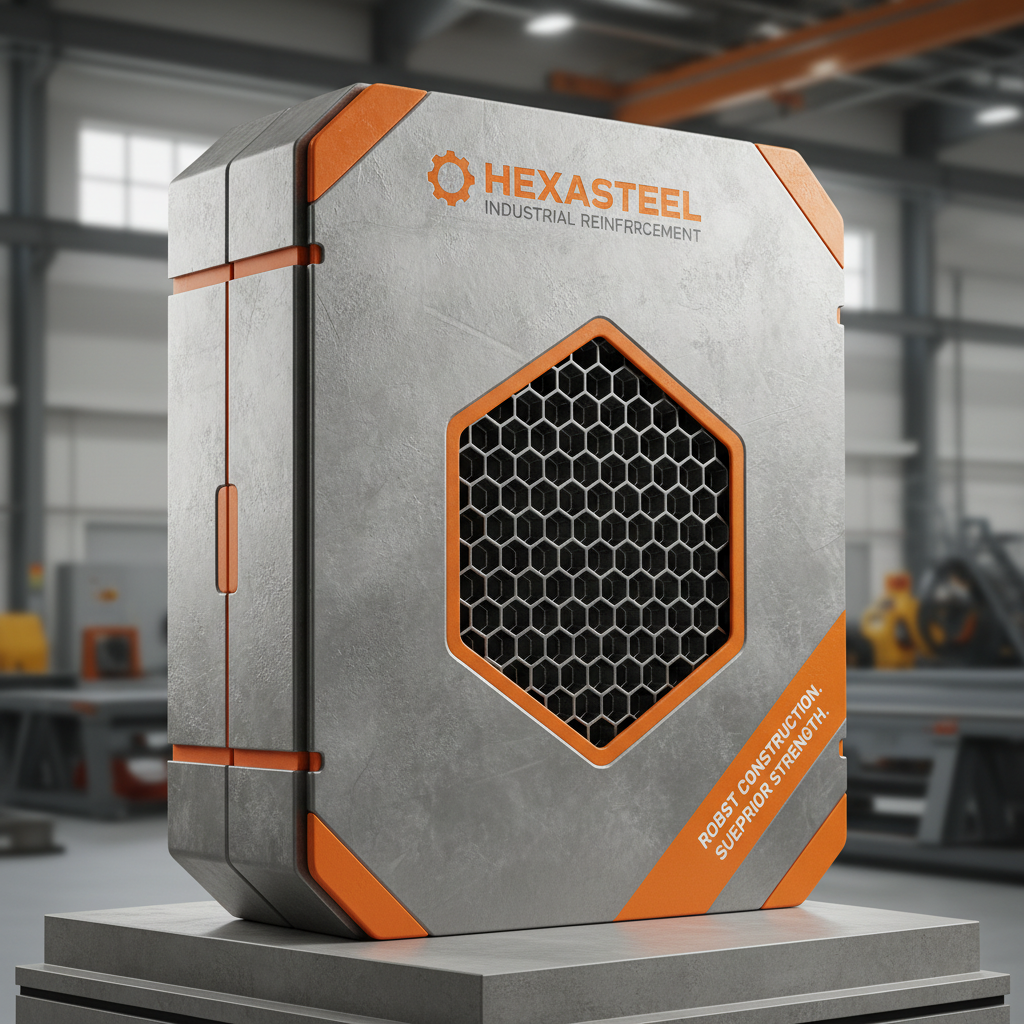


Selecting the right honeycomb core requires more than just a cursory glance at a catalog; it demands a precise alignment between material properties and aerodynamic requirements. For engineers designing wind tunnels or EMI shielding systems, the technical data provided in a specification sheet is the primary tool for predicting system behavior and ensuring structural integrity.
The challenge often lies in the gap between generic "off-the-shelf" specifications and the rigorous demands of aerospace or automotive testing. When standard cores fail to meet specific laminar flow or weight-to-strength ratios, the transition to customized engineering becomes necessary to prevent turbulence and measurement errors.
Understanding how to evaluate the best custom honeycomb core datasheet allows procurement and design teams to specify exact cell sizes and material grades that guarantee repeatable results in high-precision environments.


At its core, the honeycomb structure serves as a mechanical filter for air turbulence. By forcing air through a series of uniform, parallel hexagonal channels, the structure suppresses lateral velocity components and converts chaotic flow into laminar flow. This process is critical for any aerodynamic study where the quality of the incoming air directly affects the accuracy of the data collected.
In the context of high-precision manufacturing, the consistency of the cell wall thickness and the perpendicularity of the core to the mounting surface are the primary drivers of performance. Even minor deviations in cell geometry can introduce new vortices, defeating the purpose of the air flow straightener.
When reviewing a technical datasheet, engineers must focus on three primary variables: cell size, foil thickness, and core depth. The cell size determines the scale of the turbulence that can be effectively suppressed, while the foil thickness influences the structural rigidity and the percentage of open area available for airflow.
The aspect ratio—the ratio of the core depth to the cell size—is perhaps the most vital calculation. A higher aspect ratio generally leads to better flow straightening but increases the pressure drop across the panel. Balancing these two factors is the essence of a successful custom design.
Beyond geometry, the manufacturing method—whether it be stamping or brazing—impacts the internal cleanliness of the cells. For aerospace applications, any burrs or irregularities inside the honeycomb can lead to localized turbulence, making precision engineering non-negotiable.
Material choice is dictated by the operating environment and the required weight profile. While aluminum is the standard for lightweight applications, stainless steel and specialized composites are required for corrosive or high-pressure environments.
Material durability directly correlates to the long-term stability of the laminar flow; a deformed cell wall due to corrosion or mechanical stress creates a permanent source of turbulence.
For instance, stainless steel 304 or 316 is often specified for saltwater testing or chemical processing ventilation where oxidation would rapidly degrade an aluminum core. The choice of material also influences the thermal expansion coefficient, which is critical in wind tunnels that operate across wide temperature ranges.
Evaluating the efficacy of a honeycomb core involves measuring the "Turbulence Intensity" reduction. A high-quality custom core should demonstrate a significant drop in turbulence as air passes through the structure, ensuring that the flow is parallel to the axis of the cells.
Another key metric is the pressure loss (Delta P). A core that straightens air perfectly but blocks too much flow will force the wind tunnel fans to work harder, potentially introducing mechanical vibrations that interfere with the test results.
In practical industrial settings, the honeycomb core is rarely a standalone component; it is integrated into a larger flow-conditioning module. This often includes screens and settling chambers that work in tandem with the honeycomb to break down large-scale eddies before the honeycomb straightens the remaining flow.
A manufacturer evaluating these systems must ensure that the mounting frames do not introduce "edge effects"—turbulence created at the boundary where the honeycomb meets the wall. Precision-cut panels from suppliers like Hengshi allow for a tighter fit, minimizing these boundary layer disruptions and extending the usable test section of the tunnel.
The industry is moving toward tighter tolerances and the integration of multi-material cores. As aerodynamic testing becomes more granular—such as in the development of electric vehicle (EV) efficiency—the demand for smaller, more consistent cell sizes (under 2.0mm) is increasing.
Furthermore, the convergence of EMI shielding and airflow management is creating a need for "dual-purpose" panels. These structures must maintain high airflow permeability while providing a continuous conductive path to block electromagnetic interference, a technical challenge that requires advanced brazing techniques.
The shift toward "Zero Defect" production, as seen in ISO 9001:2015 and GJB9001C-2017 certified facilities, ensures that the variance between cells is minimized, providing the repeatability required for modern digital twin simulations.
Choosing between standard and custom cores depends on the sensitivity of the application. For general ventilation, standard sizes suffice. However, for automotive wind tunnels or aerospace research, customization is the only way to align the core with the specific velocity of the airflow.
The decision process should begin with the target turbulence intensity and the maximum allowable pressure drop. From there, the material is selected based on the environmental stressors (heat, chemicals, or pressure), and the geometry is tuned to optimize the aspect ratio.
The following framework helps designers categorize their requirements based on typical industrial benchmarks.
| Application Type | Priority Metric | Recommended Material | Key Design Focus |
|---|---|---|---|
| Aerospace Tunnel | Laminar Accuracy | Aluminum / Composite | High Aspect Ratio |
| Industrial HVAC | Pressure Drop | Aluminum | Cell Open Area |
| EMI Shielding | Attenuation (dB) | Stainless Steel / Al | Cell Wall Continuity |
| Chemical Testing | Corrosion Resistance | SS 316L | Material Grade |
| EV Aero-Testing | Low-Speed Stability | Aluminum | Precision Cell Size |
| Military RF Vent | Signal Blocking | Stainless Steel | Custom Cell Diameter |
The "best" core is not defined by a single material but by how well its geometry matches the airflow velocity. It must provide the maximum reduction in turbulence intensity with the minimum possible pressure drop. A high-quality core also features uniform cell size and perfectly straight walls, ensuring that no new vortices are created during the straightening process.
Cell size refers to the diameter of the hexagonal opening. Smaller cells are more effective at suppressing small-scale turbulence but increase the resistance to airflow. When reviewing a datasheet, ensure the cell size is appropriate for the scale of the eddies in your flow; generally, a smaller cell relative to the flow's characteristic length improves laminar quality.
Stainless steel is the preferred choice when the environment involves high temperatures, corrosive chemicals, or extreme pressure that would deform aluminum. Additionally, for EMI/EMC applications, stainless steel can offer different shielding effectiveness and structural longevity in harsh industrial settings where aluminum might oxidize or fail mechanically.
The aspect ratio (length of the cell divided by the cell diameter) determines the "straightening power." A low aspect ratio may leave residual turbulence, leading to inconsistent readings. However, an excessively high aspect ratio increases the air's travel distance through the core, raising the pressure drop and potentially altering the velocity profile of the air entering the test section.
Yes, this is the primary function of an EMI ventilation panel. By designing the honeycomb cells as waveguides below the cutoff frequency of the electromagnetic interference, the structure blocks RF signals while remaining open to airflow. The precision of the cell size is the critical factor in determining which frequencies are blocked.
Repeatability depends on the uniformity of the core across its entire surface. If cell sizes vary or walls are bowed, the air will flow preferentially through "paths of least resistance," creating a non-uniform velocity profile. Precision manufacturing ensures that every cubic centimeter of the core behaves identically, allowing researchers to trust that their data is a result of the test subject, not the equipment.
The shift from generic components to precision-engineered custom cores marks the difference between an approximate measurement and a scientific certainty. By prioritizing the relationship between aspect ratio, material durability, and cell consistency, engineers can eliminate the variables that traditionally plague aerodynamic and EMI testing.
As manufacturing capabilities evolve, the ability to specify exact technical parameters in a datasheet allows for a seamless transition from theoretical simulation to physical reality, ensuring that the infrastructure of research—be it a wind tunnel or a shielded room—performs with absolute reliability.