


Comparing Customized Hexagonal 316 Stainless Steel Honeycomb Core For Sewage Treatment Options: Specifications, Materials and Supplier Documentation
SIDE BY SIDE
Comparing Customized Hexagonal 316 Stainless Steel Honeycomb Core For Sewage Treatment Options: Specifications, Materials and Supplier Documentation
Procurement teams evaluating stainless steel honeycomb cores for sewage treatment and industrial corrosion environments face a practical question: which product configuration best matches their operating conditions, cell-size requirements and fabrication preferences? This comparison examines three product lines from Hengshi (Langfang) Precision Machinery Manufacturing Co., Ltd. across the criteria that matter most to buyers—material grade, cell-size range, wall thickness, fabrication method, surface treatment, customization scope, and application focus.

Product A — Customized Hexagonal 316 Stainless Steel Honeycomb Core For Sewage Treatment (ref-1)
Product B — Custom 316 Stainless Steel Honeycomb Core (ref-2)
Product C — 20mm Stainless Steel Honeycomb Core Panels (ref-3)
Overview
When specifying a Customized Hexagonal 316 Stainless Steel Honeycomb Core For Sewage Treatment, buyers must weigh more than alloy grade alone. Cell geometry, joining method, surface finish and available shapes each affect long-term performance in wet, chemically aggressive environments. Hengshi (Langfang) Precision Machinery Manufacturing Co., Ltd. publishes documentation for three distinct stainless steel honeycomb core products. This article places them side by side so engineers and procurement teams can identify which offering most closely matches their project specifications.
The Three Products Under Comparison
Product A — Customized Hexagonal 316 Stainless Steel Honeycomb Core For Sewage Treatment
The primary product in this comparison is positioned explicitly for sewage treatment and corrosion-critical industrial use. Its documentation specifies a hexagonal cell geometry, 316 Stainless Steel as a key available material, and lists a broad set of alloys, cell sizes, wall thicknesses and surface treatments.
Product B — Custom 316 Stainless Steel Honeycomb Core
This product shares the 316 SS material base and targets "demanding environments such as sewage treatment and high-corrosion industrial applications." Its documentation provides the most detailed parameter table of the three and includes an explicit comparison of fabrication methods (spot welding vs. vacuum brazing) and their relative impact on shielding performance.
Product C — 20mm Stainless Steel Honeycomb Core Panels
This product is primarily for wind tunnel, aerospace and automotive testing applications. Its core size is 20 mm, and its material is "high-grade stainless steel." The product offers customization of thickness and surface finish.
Side-by-Side Specification Comparison
| Criterion | Product A — Sewage Treatment Core | Product B — Custom 316 SS Core | Product C — 20mm SS Core Panels |
|---|---|---|---|
| Material Grade | 316 Stainless Steel (plus Hastelloy X, carbon steel, copper, brass, aluminium) | 316 Stainless Steel (plus Hastelloy X, carbon steel, copper, brass, aluminium) | High-grade stainless steel (grade not specified in documentation) |
| Cell Sizes (mm) | 0.8, 1.6, 2.0, 2.5, 3.2, 4.2, 4.8, 5.6, 6.4, 10, 12, 30, 40 | 0.8, 1.6, 2.0, 2.5, 3.2, 4.2, 4.8, 5.6, 6.4, 10, 12, 30, 40 | 20 mm (standard); other sizes noted as customizable |
| Standard Wall Thickness (mm) | 0.13, 0.15, 0.20 | 0.13, 0.15, 0.20 | |
| Fabrication Method | Spot welding; vacuum brazing available | Spot welding; vacuum brazing available | Not specified in documentation |
| Surface Treatment | Electroless nickel plating, tin plating, powder coating, painting | Electroless nickel plating, tin plating, powder coating, painting | Custom finishes |
| Available Shapes / Patterns | Expanded, slant, perforated, tapped, frameless, with frames; camber, ring, tape and other complex patterns | Expanded, slant, perforated, tapped, frameless, with frames; camber, ring, tape and other complex patterns | Not specified; customizable dimensions and thickness noted |
| Outer Dimensions | Fully customizable | Fully customizable | Customizable based on application |
| Documented Primary Application | Sewage treatment, high-corrosion industrial environments, aircraft secondary structures, shock-absorbing pads | Sewage treatment, high-corrosion industrial applications, filtration, shielding, structural reinforcement | Wind tunnel testing, aerodynamics research, automotive testing, aerospace simulations |
| Key Documented Properties | Moisture resistance, flame resistance, fungi resistance | Moisture resistance, flame resistance, fungi resistance; also EMI/EMC shielding (vacuum brazed) | Corrosion resistance, precision airflow control, high stiffness, lightweight |
| Packing | Industrial-grade wooden cases | Industrial-grade wooden cases | Not specified in documentation |
Criterion-by-Criterion Analysis
1. Material Grade and Corrosion Suitability
Products A and B both explicitly name 316 Stainless Steel as an available material and call out sewage treatment or high-corrosion environments in their application documentation. The use of 316 SS—rather than 304 or carbon steel—is relevant for chloride-bearing wastewater because 316 grades carry molybdenum content that improves pitting resistance; however, the published documentation does not include test data or standards citations, so buyers should request those from the supplier separately.
Product C documents "high-grade stainless steel" without naming the grade. Buyers who need a specific alloy designation (e.g., 316 or 316L) for sewage treatment procurement approval would need to request confirmation from the supplier before specifying this product.
2. Cell Size Range
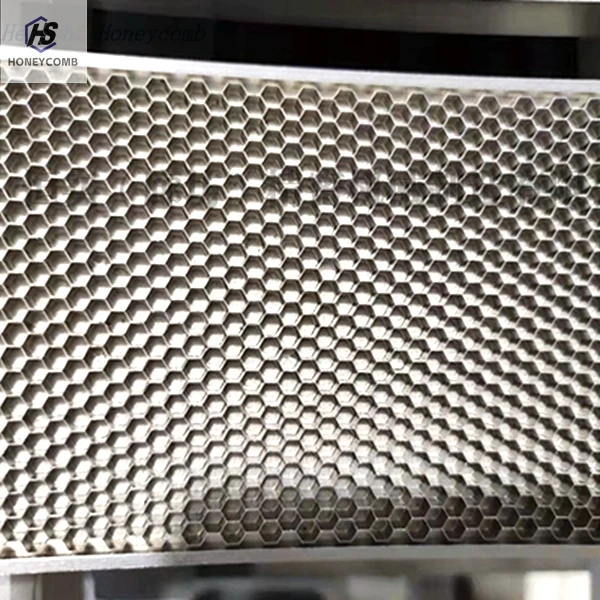
Products A and B document the same thirteen discrete cell sizes from 0.8 mm to 40 mm. This breadth supports both fine-filtration requirements (small cells) and structural or flow-straightener applications (larger cells). Product C's documentation lists 20 mm as the standard size and notes that other sizes are customizable but does not enumerate them. For buyers who require a specific non-20 mm cell size, Products A and B provide a fuller documented range.
3. Fabrication Method: Spot Welding vs. Vacuum Brazing
Both Products A and B document two fabrication options. Spot welding is described as providing good performance and stability. Vacuum brazing is described as delivering "much higher shielding effectiveness" and is associated with higher structural integrity under demanding loads. Product B's documentation explicitly positions vacuum brazing as advantageous for EMI/EMC shielding applications in addition to sewage treatment use. Product C does not specify the fabrication method in its published documentation.
For sewage treatment projects where structural longevity in immersed or splash-zone conditions is the priority, buyers should discuss with the supplier which joining method is recommended for the specific operating environment, as the documentation does not include immersion test data.
4. Wall Thickness Options
Products A and B each list three standard wall thicknesses: 0.13 mm, 0.15 mm and 0.20 mm. Thicker walls generally increase compressive strength and service life in mechanically demanding environments.
5. Surface Treatment
Products A and B both document four surface treatment options: electroless nickel plating, tin plating, powder coating and painting. Each of these can modify the surface's resistance to specific chemical agents or improve adhesion to adjacent materials. Product C notes that custom surface finishes are available but does not enumerate them. Buyers selecting a core for a chemically aggressive wastewater stream should discuss which treatment is appropriate for their medium with Hengshi (Langfang) Precision Machinery Manufacturing Co., Ltd.
6. Shape and Pattern Customization
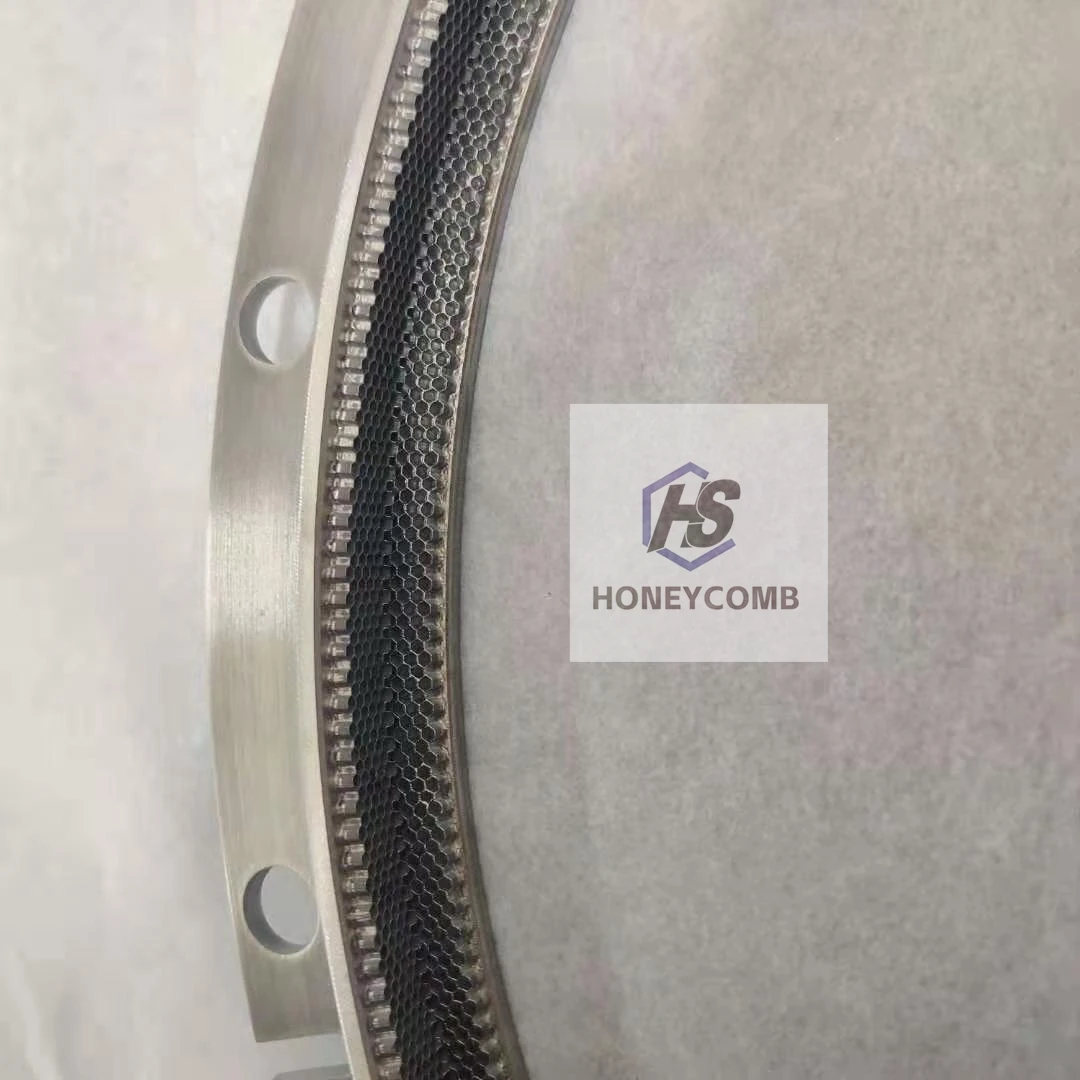
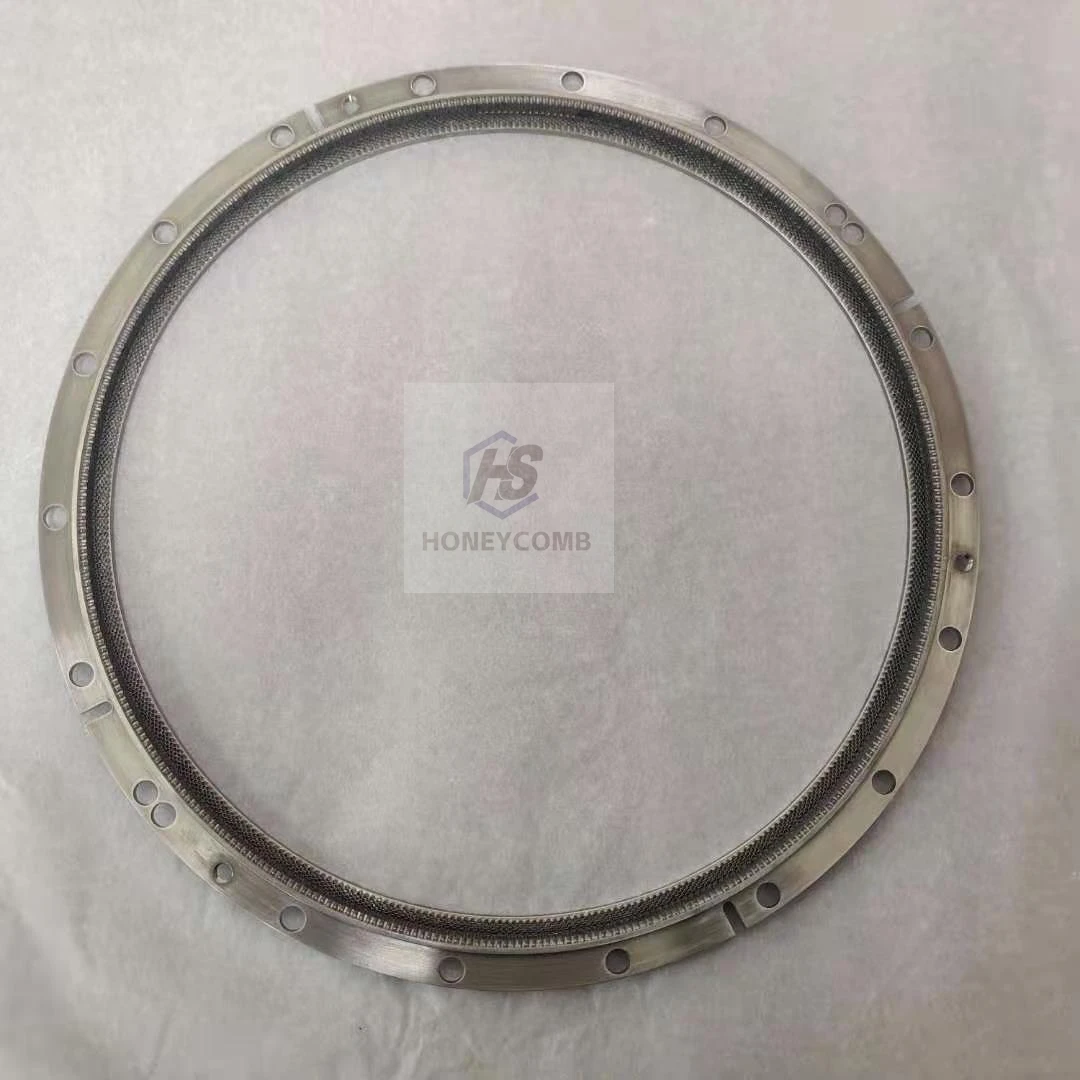
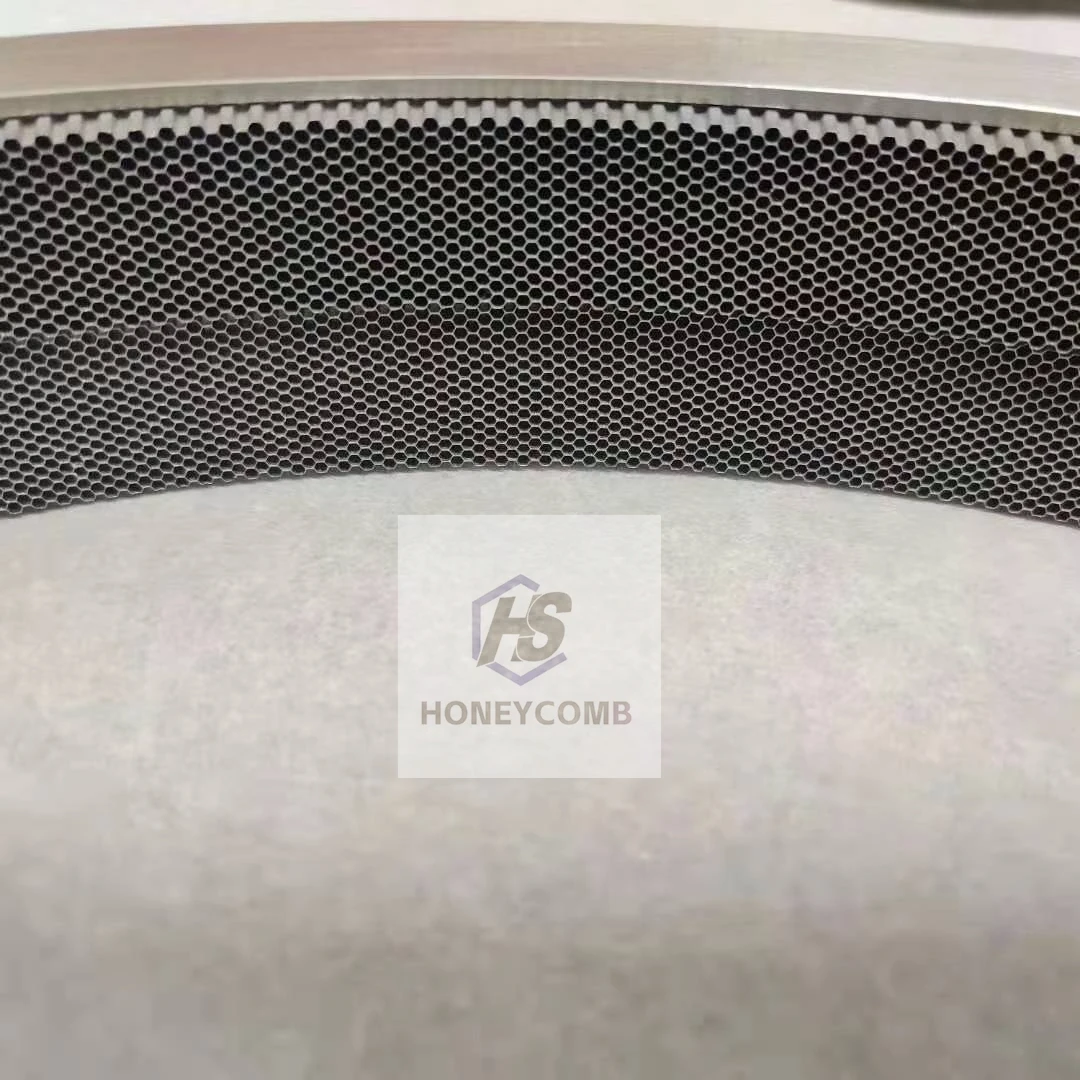
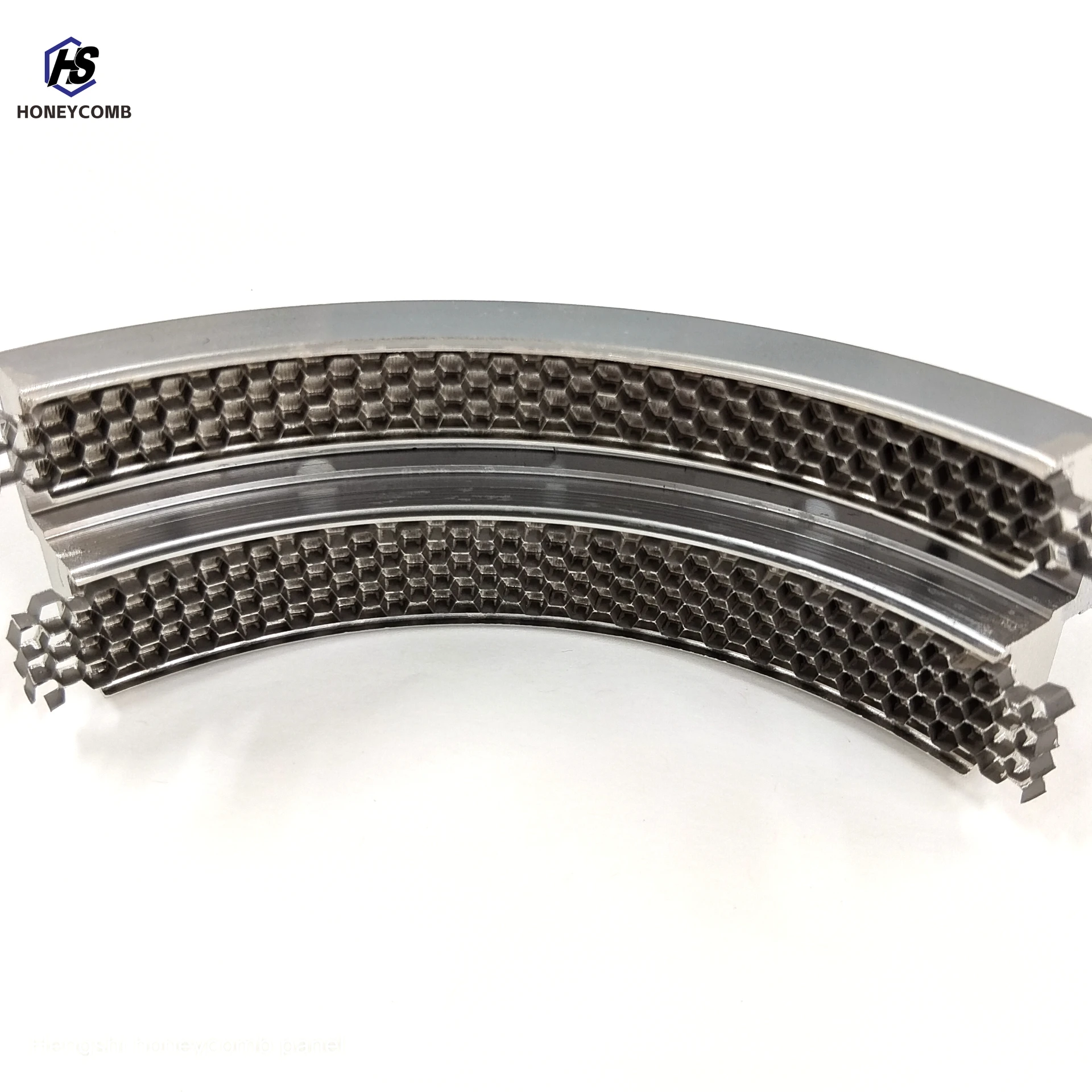
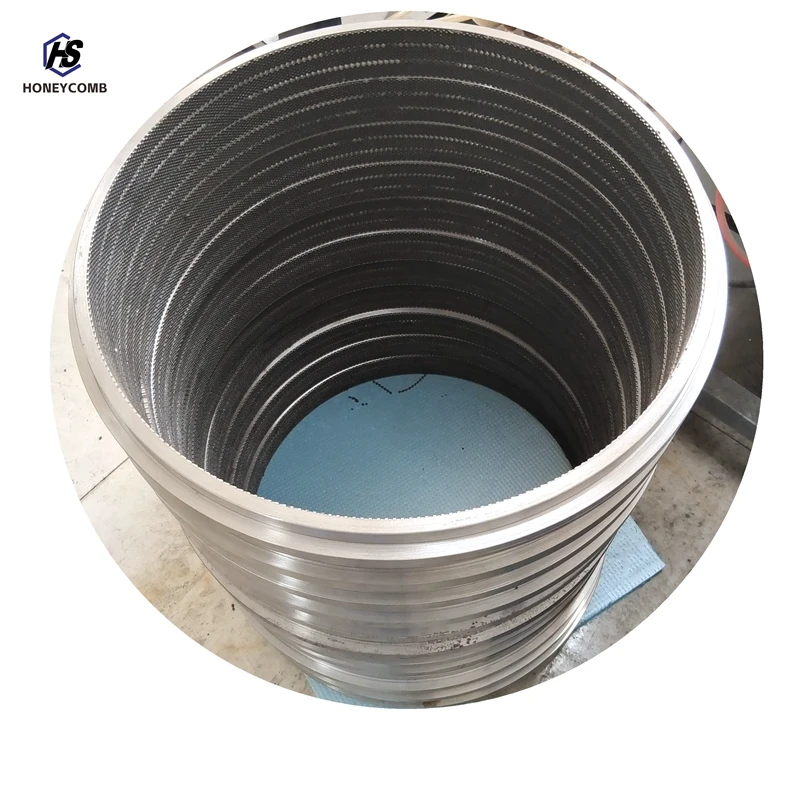
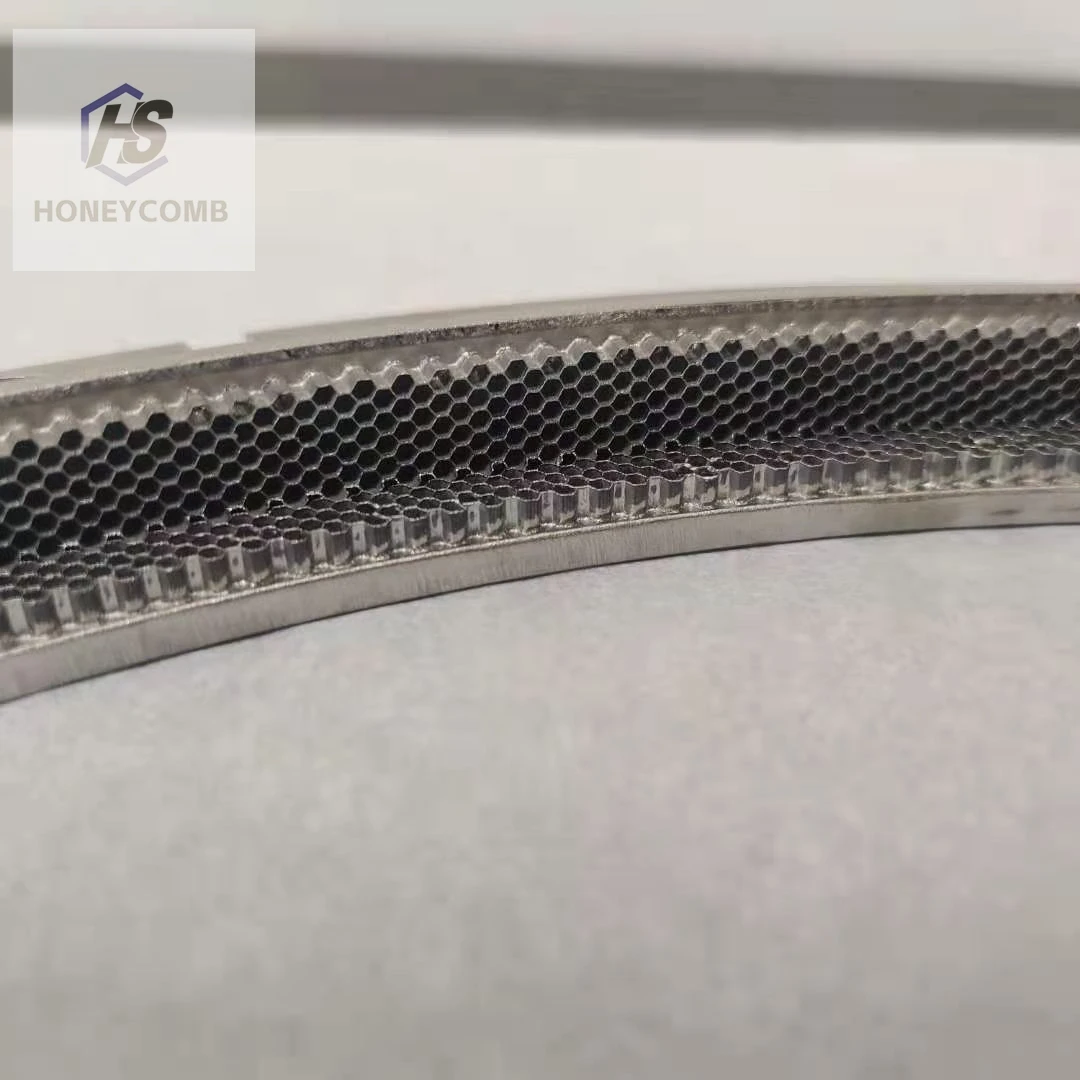
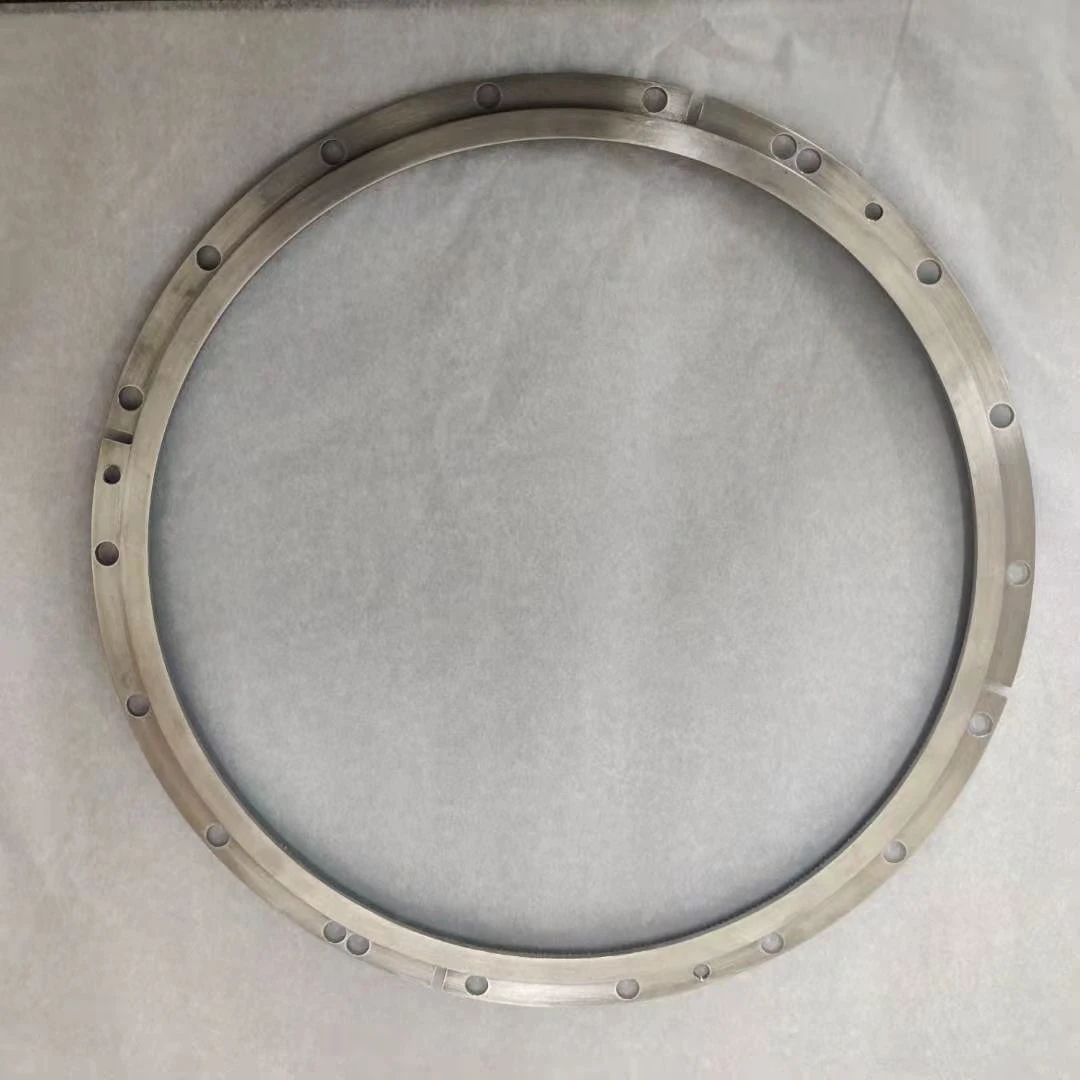
Products A and B share a documented set of patterns (expanded, slant, perforated, tapped, frameless, framed) and shapes (camber, ring, tape, complex). These options are relevant when the honeycomb core must conform to a curved housing or a non-rectangular equipment opening—common in treatment plant plumbing assemblies. Product C's documentation focuses on flat-panel wind tunnel geometry and does not enumerate pattern types.
7. Documented Application Fit
Products A and B match sewage treatment. Product B also addresses EMI/EMC shielding, which may be relevant in treatment plants with sensitive electronic monitoring equipment. Product C is for precision aerodynamics testing; while the stainless steel construction confers corrosion resistance, its primary application domain differs.
Supplier Documentation Notes
All three products are manufactured and documented by Hengshi (Langfang) Precision Machinery Manufacturing Co., Ltd., which reports over 13 years of experience in metal honeycomb research, development and production, a facility of more than 5,000 square metres, and a team that includes welders, design engineers and electrical control technicians. The company states it has independently developed honeycomb stamping and welding equipment and has conducted research on stainless steel honeycomb preparation and brazing technology.
For any product, the supplier documentation indicates that outer dimensions and panel thicknesses are customizable. Buyers requiring formal test reports, material certifications or compliance documentation should request these directly, as they are not reproduced in the published product pages reviewed here.
For custom engineering inquiries related to the Custom 316 Stainless Steel Honeycomb Core or the 20mm Stainless Steel Honeycomb Core Panels, the respective product pages on the Hengshi website provide contact and inquiry pathways.
Summary Table: Which Product to Consider
| Buyer Priority | Best-Documented Match | Notes |
|---|---|---|
| Confirmed 316 SS grade for sewage treatment | Products A or B | Both explicitly name 316 SS and sewage treatment in documentation |
| Widest documented cell-size selection | Products A or B | Thirteen sizes, 0.8–40 mm listed |
| Vacuum brazing for shielding or high-integrity joints | Product B | Most detailed brazing documentation |
| Flat-panel wind tunnel or aerospace simulation | Product C | Primary documented application |
| Specific wall thickness confirmation | Products A or B | 0.13, 0.15, 0.20 mm |
| Aerodynamics / airflow precision (non-sewage) | Product C | 20 mm core documented for wind tunnel precision |
Conclusion
For procurement teams sourcing a Customized Hexagonal 316 Stainless Steel Honeycomb Core For Sewage Treatment, the available documentation most directly supports Products A and B. Both confirm 316 Stainless Steel as an available material, explicitly reference sewage treatment and high-corrosion environments, document the same cell-size range and wall-thickness options, and list comparable surface treatment choices. Product B provides the most detailed parameter documentation and the clearest treatment of fabrication method differences.
Product C is well-documented for wind tunnel and aerodynamics applications and shares the corrosion-resistant stainless steel construction, but its published specification sheet does not address sewage treatment, confirm a steel grade, or enumerate cell sizes beyond the 20 mm standard.
As with any custom industrial component, buyers should engage Hengshi (Langfang) Precision Machinery Manufacturing Co., Ltd. directly to confirm tolerances, material certifications, test reports and lead times for the specific configuration required.
THE PEOPLE

About the author
THE COMPANY
Hengshi (Langfang) Precision Machinery Manufacturing Co., Ltd.
Hengshi Honeycomb was founded on August 2019 by Mr. Guo Fengshuang. The company is located in Langfang City, Hebei Province, near south of Beijing Daxing airport. with a registered capital of 14 million yuan and an area of above 5000 square meters. Our team has above 13 years of experience focusing on research, development and production,and constantly improving our production process, and always in the leading position in the metal honeycomb industry.…
About Us ↗Visit company website ↗YOUR NEXT STEP
Bring your brief. Start a useful conversation.
Use case, specification, quantity and delivery window: make the next conversation specific.
-
How to Choose a Vented Aluminum Honeycomb for a 120 × 120 mm FanNewsNov.10,2026
-
High Performance EMI Honeycomb Vent for Sale: Buyer FAQsNewsNov.03,2026
-
High Precision Metal Honeycomb Seals buy turbine core datasheetNewsJul.01,2026
-
High Performance Military Grade Metal Honeycomb Core for SaleNewsJun.29,2026
-
Find High Performance Brazed Best Honeycomb Strips for Sale NowNewsJun.27,2026
-
High Performance Industrial Honeycomb Shield for Sale for EMI ProtectionNewsJun.26,2026
-
Best Honeycomb Waveguide Window Supplier for Precision EngineeringNewsJun.25,2026






 English
 Afrikaans
 Albanian
 Amharic
 Arabic
 Armenian
 Azerbaijani
 Basque
 Belarusian
 Bengali
 Bosnian
 Bulgarian
 Catalan
 Cebuano
 China
 China (Taiwan)
 Corsican
 Croatian
 Czech
 Danish
 Dutch
 Esperanto
 Estonian
 Finnish
 French
 Frisian
 Galician
 Georgian
 German
 Greek
 Gujarati
 Haitian Creole
 Hausa
 Hawaiian
 Hebrew
 Hindi
 Miao
 Indonesian
 Italian
 Japanese
 Javanese
 Malay
 Persian
 Portuguese
 Punjabi
 Russian
 Spanish
 Swahili
 Telugu
 Vietnamese