


High Performance Custom RFI EMI Shielding Design Solutions
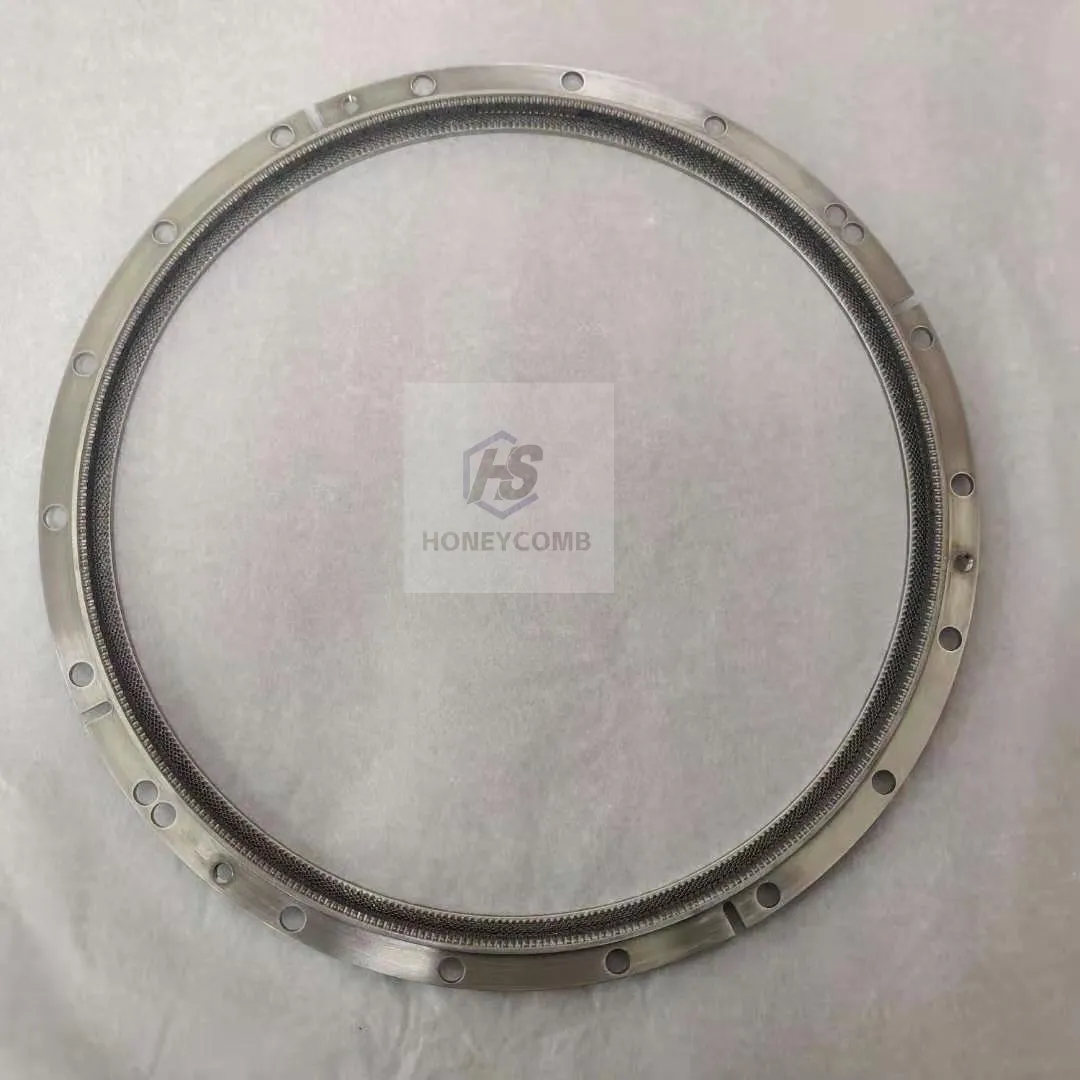
Effective electromagnetic interference (EMI) and radio frequency interference (RFI) management is critical for the stability of modern aerospace, defense, and industrial electronic systems. When standard shielding gaskets or plates are insufficient, engineers turn to honeycomb structures to balance the competing needs of ventilation and signal attenuation. By leveraging a precise hexagonal geometry, these components act as waveguides beyond cutoff, allowing air to flow freely while blocking disruptive electromagnetic waves from entering or exiting sensitive enclosures.
Achieving a successful custom rfi emi shielding design requires a deep understanding of the relationship between cell size, foil thickness, and the specific frequency ranges being targeted. Whether the application involves high-temperature vacuum brazing for extreme environments or cost-effective spot welding for standard industrial use, the structural integrity of the honeycomb core determines the overall shielding effectiveness. This technical guide explores the engineering logic and manufacturing parameters essential for implementing high-performance metal honeycomb shielding in demanding technical environments.

Waveguide Theory and the Role of Hexagonal Honeycomb Structures
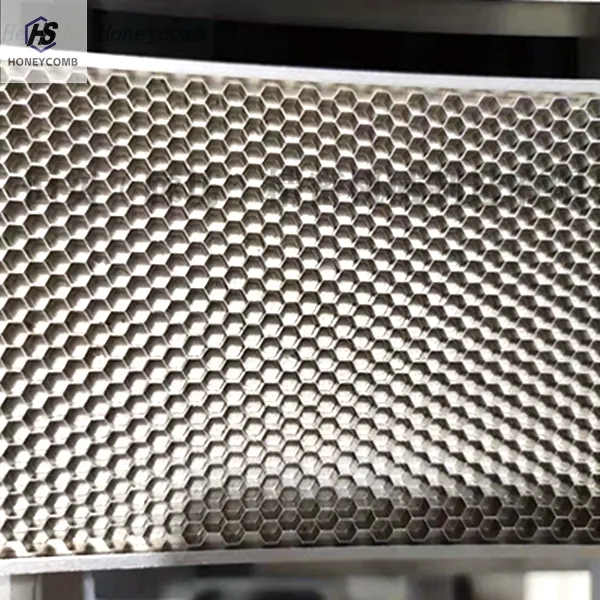
The core principle behind EMI shielded honeycomb vents is the "waveguide beyond cutoff" effect. In this configuration, each individual cell of the honeycomb acts as a circular or hexagonal waveguide. If the diameter of the cell is sufficiently small relative to the wavelength of the interfering signal, the wave cannot propagate through the tube and is instead reflected or absorbed. This allows the vent to serve a dual purpose: maintaining thermal management through air ventilation while providing a robust barrier against electromagnetic noise.
The performance of these structures is heavily dependent on the precision of the honeycomb geometry. Any deformation in the cell walls or gaps in the welding can create "leaks" that significantly degrade the shielding effectiveness (SE). For high-frequency applications, maintaining a strict cell size—ranging from 0.8mm to 12mm depending on the target frequency—is paramount. Metal honeycombs produced via precision stamping ensure that every cell is uniform, maximizing the attenuation across the desired spectrum.
- Frequency Cut-off: Determined primarily by the cell diameter; smaller cells block higher frequencies.
- Airflow Efficiency: The hexagonal shape minimizes pressure drop compared to perforated plates.
- Structural Rigidity: The interconnected walls provide high strength-to-weight ratios, essential for aerospace modules.

Comparing Fabrication Techniques: Spot Welding vs. Vacuum Brazing
Selecting the appropriate joining method is one of the most critical decisions in the manufacturing of shielding vents. The choice depends on the operating environment, budget, and the required level of shielding performance. At Hengshi Honeycomb, we utilize two primary techniques to meet these varying needs: resistance spot welding and high-temperature vacuum brazing.
Spot Welding is the preferred choice for commercial and industrial applications where cost-efficiency is a priority. It provides medium-intensity strength and adequate shielding for most standard electronics. While the joints are discrete, the overall structure remains stable and effective for general-purpose EMI/RFI suppression. It is an ideal solution for enclosures that do not face extreme thermal or corrosive stress.
High-Temperature Vacuum Brazing is engineered for mission-critical applications. By heating the entire structure in a vacuum furnace with a filler metal, every single joint in the honeycomb is fully bonded. This results in a monolithic structure with exceptionally high intensity and maximum shielding performance. Furthermore, brazed components can withstand temperatures up to 700 degrees Celsius and offer superior corrosion resistance, making them indispensable for wind tunnels, jet engines, and chemical processing environments.
Application Scenarios: From Wind Tunnels to Electronic Enclosures
The versatility of metal honeycomb cores allows them to be integrated into a wide array of high-precision systems. In aerospace testing, for instance, our Air Flow Straightener Honeycombs are used in wind tunnels to eliminate turbulence and ensure laminar flow. This is critical for accurate aerodynamic measurements in automotive and aircraft research, where inconsistent air entry could lead to unreliable data.
In the realm of electronics, EMI shielded honeycomb vents are integrated into server racks, military communication hubs, and medical imaging equipment. These systems generate significant heat and require active cooling, but they cannot afford the risk of signal leakage or external interference. By integrating a customized honeycomb vent into the chassis, engineers can maintain a "zero-leak" electromagnetic environment without compromising the thermal health of the internal components.
Additional use cases include:
- Anechoic Chambers: Using sound-absorbing and EMI-shielded panels to create isolated testing zones.
- Waveguide Panels: Directing RF energy with precision while blocking parasitic oscillations.
- Honeycomb Seals: Providing a tight electromagnetic seal around doors and access panels in shielded rooms.
Technical Specification and Selection Matrix
| Material Option | Welding Method | Max Temperature | Shielding Level |
|---|---|---|---|
| SUS304 / Carbon Steel | Spot Welding | Moderate | Medium |
| SUS316L / 321 | Vacuum Brazing | Up to 700°C | Very High |
| Aluminum Alloy | Spot Welding | Low to Moderate | Medium |
| SUS316L | Vacuum Brazing | Up to 700°C | Extreme |
| Custom Alloys | Application Specific | Varies by material | Application Dependent |
Engineering Considerations for Procurement and Implementation
When sourcing metal honeycomb components, procurement managers and engineers must look beyond the basic material list. The actual effectiveness of the shielding is found in the tolerances of the foil thickness and the consistency of the cell size. Variations in foil thickness (typically 0.13mm to 0.2mm) can affect both the weight of the component and its ability to attenuate specific frequencies. A thinner foil may save weight but could be more susceptible to deformation during the assembly process.
Furthermore, the outer dimension and shape—whether it be a C-frame, H-frame, or a fully customized geometry—must be perfectly matched to the mounting flange to prevent "gap leakage." Any gap between the honeycomb core and the enclosure wall acts as a slot antenna, potentially allowing EMI to bypass the shield entirely. We recommend specifying the mounting method and flange requirements during the design phase to ensure a seamless integration.
Quality certification is another critical factor. For defense and aerospace projects, compliance with standards such as ISO 9001:2015 and GJB9001C-2017 ensures that the manufacturing process is controlled and the products are traceable. The "zero defectives" approach is not just a goal but a necessity when the failure of a single vent could jeopardize a multi-million dollar electronic system.
Future Trends in EMI Shielding and Honeycomb Technology
As 5G and 6G technologies push operating frequencies higher, the demand for smaller cell sizes and more conductive materials is increasing. We are seeing a shift toward hybrid structures that combine metal honeycomb cores with advanced absorbing materials to not only reflect but also dissipate electromagnetic energy. This reduces the risk of internal resonance within the enclosure, which is a common challenge in densely packed electronic modules.
Additionally, the integration of additive manufacturing and precision EDM (Electrical Discharge Machining) is allowing for more complex, non-linear honeycomb geometries that can optimize airflow in ways that traditional stamping cannot. For buyers, this means that the ability to provide a custom rfi emi shielding design that balances fluid dynamics with electromagnetic isolation will become the primary differentiator among suppliers.
Looking forward, the industry is moving toward more sustainable materials and more energy-efficient brazing processes. The goal is to maintain the extreme performance levels required for vacuum and high-temperature environments while reducing the environmental footprint of the production cycle. Companies that invest in independent R&D for stamping and welding equipment will be best positioned to lead this evolution.
Technical FAQ: Solving Common Honeycomb Shielding Challenges
How do I determine the correct cell size for my shielding needs?
The cell size is determined by the highest frequency you need to block. As a general rule, the cell diameter must be significantly smaller than the wavelength of the target frequency to ensure the waveguide beyond cutoff effect. Our available sizes range from 0.8mm to 30mm to accommodate various spectral requirements.
What is the main advantage of vacuum brazing over spot welding?
Vacuum brazing creates a continuous, monolithic bond across all cell walls, resulting in significantly higher structural strength, better shielding effectiveness, and the ability to withstand temperatures up to 700°C and harsh corrosive environments.
Can these honeycomb vents be used in high-corrosion environments?
Yes, by selecting materials like SUS316L or SUS321 and utilizing vacuum brazing, the components become highly resistant to corrosion. This makes them suitable for marine, chemical, and aerospace applications.
How does the foil thickness impact the shielding performance?
Foil thickness primarily affects the structural rigidity and the reflection coefficient. While thicker foil (e.g., 0.2mm) increases durability and strength, the cell diameter remains the primary driver for the frequency cutoff point.
What are the typical delivery shapes for these products?
We commonly provide cores in C-frame and H-frame configurations, but we are fully capable of manufacturing entirely customized shapes and outer dimensions to fit your specific chassis or wind tunnel design.
Do your products comply with environmental standards?
Yes, our products are manufactured to comply with ROHS and SGS certifications, ensuring they are safe for use in global markets and meet strict environmental regulations.
Technical References and Industry Standards
- IEEE Standards on Electromagnetic Compatibility (EMC)
- ISO 9001:2015 Quality Management Systems
- NIST Guidelines for RF Measurement and Shielding
- NASA Technical Reports on Aerospace Honeycomb Structures
Selecting the right metal honeycomb structure is a balance of physics and manufacturing precision. Whether you are optimizing a wind tunnel or securing a military communication array, the quality of the weld and the accuracy of the cell geometry are the ultimate determinants of success. For those requiring extreme durability and maximum attenuation, vacuum brazing remains the gold standard in industrial shielding.
Related Technical Insights








 English
 Afrikaans
 Albanian
 Amharic
 Arabic
 Armenian
 Azerbaijani
 Basque
 Belarusian
 Bengali
 Bosnian
 Bulgarian
 Catalan
 Cebuano
 China
 China (Taiwan)
 Corsican
 Croatian
 Czech
 Danish
 Dutch
 Esperanto
 Estonian
 Finnish
 French
 Frisian
 Galician
 Georgian
 German
 Greek
 Gujarati
 Haitian Creole
 Hausa
 Hawaiian
 Hebrew
 Hindi
 Miao
 Indonesian
 Italian
 Japanese
 Javanese
 Malay
 Persian
 Portuguese
 Punjabi
 Russian
 Spanish
 Swahili
 Telugu
 Vietnamese