


Buy Stainless Steel Honeycomb Panel for Sale for Aerospace
Achieving precise laminar airflow is a critical challenge in high-velocity aerodynamic testing. For engineers managing wind tunnels or aerospace research facilities, the transition from turbulent to steady airflow can determine the validity of an entire data set. High-performance stainless steel honeycomb structures provide the necessary geometric precision to rectify air streams, effectively minimizing turbulence and optimizing the aerodynamic environment. By integrating these specialized panels, researchers can ensure that the air entering a testing section is uniform and predictable, which is essential for the accurate analysis of aircraft components, spacecraft heat shields, and rocket nozzles.
Whether you are designing a new wind tunnel module or upgrading existing air straightening systems, selecting a material that balances structural rigidity with corrosion resistance is paramount. Stainless steel honeycomb panels are specifically engineered to maintain their cellular integrity under extreme pressure and temperature fluctuations, providing a reliable solution for the most demanding aerospace and industrial applications.

The Mechanics of Wind Rectification and Turbulence Reduction
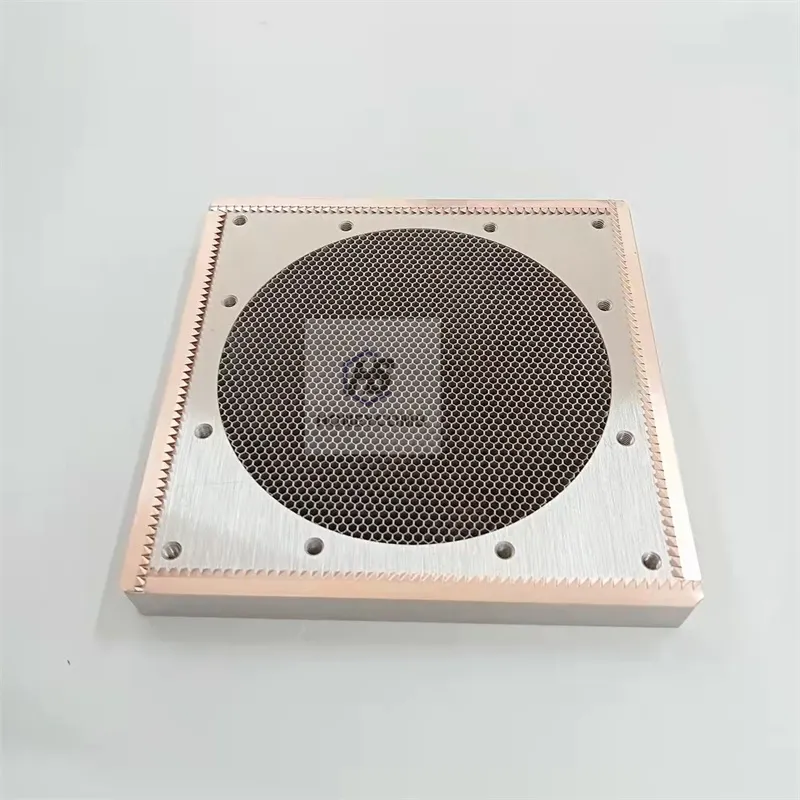
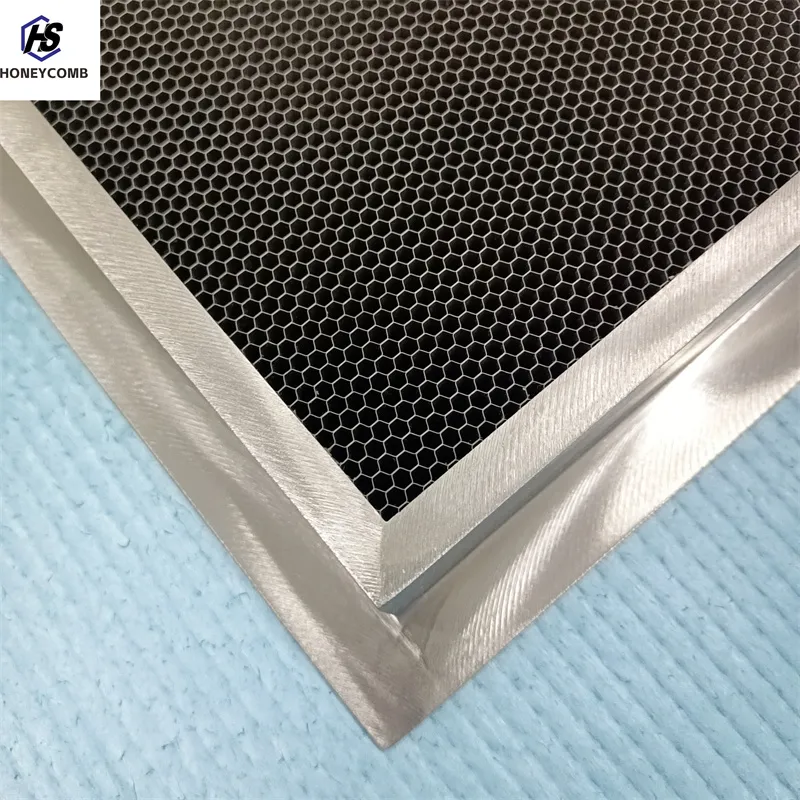
The primary function of a honeycomb air straightener is to convert a chaotic, turbulent air stream into a smooth, laminar flow. This is achieved through the repetitive hexagonal geometry of the honeycomb core, which forces the air to travel in parallel paths. As the air passes through these small, uniform cells, lateral velocity components are suppressed, and the flow is effectively "straightened" along the longitudinal axis of the panel.
This process is vital for aerodynamic analysis because turbulence introduces unpredictable variables into testing. In a wind tunnel, if the airflow is not uniform, the lift and drag coefficients measured on a model will be inaccurate. By utilizing a stainless steel honeycomb structure, engineers can significantly reduce these variances. The rigid walls of the honeycomb cells prevent deformation under high-speed wind loads, ensuring that the rectification effect remains consistent across the entire cross-section of the flow channel.
Furthermore, the choice of stainless steel ensures that the panels do not degrade over time due to oxidation or environmental moisture, which would otherwise alter the cell geometry and negatively impact the airflow quality. This stability is what makes these panels the preferred choice for long-term aerospace research installations.

Material Engineering for Extreme Aerospace Environments
Aerospace testing often involves conditions that would cause standard materials to fail. The Hengshi air straightening honeycomb is available in high-grade alloys including 304, 316, 316L, and 321 stainless steel. These materials are selected not only for their strength but for their exceptional resistance to temperature extremes and chemical corrosion. In high-speed wind tunnels, the friction and pressure can create localized heating; stainless steel maintains its structural integrity far better than aluminum in these specific high-heat scenarios.
The strength-to-weight ratio of the honeycomb architecture allows these panels to be incredibly robust without adding excessive mass to the tunnel setup. This is critical when installing large-scale rectification modules where structural support must be optimized. Moreover, the use of vacuum brazing and precision CNC processing ensures that every cell is perfectly aligned and securely bonded, eliminating the risk of cell collapse during high-pressure testing.
For projects requiring the highest level of purity and environmental compliance, our products meet ROHS and SGS certifications. This ensures that the materials used do not introduce contaminants into the airflow, which is particularly important in specialized chemical or atmospheric simulation tests where material off-gassing or corrosion particles could skew results.
Strategic Application in Aircraft and Spacecraft Development
The application of stainless steel honeycomb panels extends across the entire lifecycle of aerospace development. In the early design phases, these panels are used in wind tunnels to test the aerodynamic efficiency of wing profiles and fuselage shapes. By ensuring a steady flow, engineers can refine the aircraft's geometry to improve fuel efficiency and reduce drag, directly impacting the commercial viability of the aircraft.
In the realm of spacecraft and rocket testing, the requirements are even more stringent. Simulating the atmospheric reentry of a probe or the ascent of a launch vehicle requires wind tunnels capable of hypersonic speeds. In these environments, the air straightening honeycomb must withstand immense pressure gradients while maintaining a perfectly laminar profile. The ability to customize cell sizes—ranging from 0.8mm to 30mm—allows for the precise tuning of the rectification effect based on the specific Mach number and Reynolds number of the test.
Beyond the wind tunnel, these structures are utilized as honeycomb seals and EMI/EMC shielded vents in aircraft electronics housings. This versatility demonstrates the fundamental value of the honeycomb geometry: the ability to provide high structural strength and functional filtration (whether of air or electromagnetic interference) within a compact footprint.
Technical Selection Criteria for Honeycomb Air Straighteners
| Selection Factor | Low-Speed Application | High-Speed / Hypersonic | Corrosive Environment |
|---|---|---|---|
| Recommended Material | Aluminum / SS 304 | SS 316L / SS 321 | SS 316L / Special Alloys |
| Cell Size Priority | Larger (e.g., 10mm+) | Smaller (e.g., 0.8mm - 3.2mm) | Application-dependent |
| Pressure Resistance | Low to Medium | Very High | Medium to High |
| Core Thickness | Standard | Extended (for better straightening) | Standard to Extended |
| Critical Requirement | Weight Reduction | Geometric Stability | Chemical Inertness |
Customization and Manufacturing Capabilities for Precision Cores
Every wind tunnel is unique, which is why a "one size fits all" approach is impossible for air rectification. Hengshi Precision Machinery specializes in fully customizable honeycomb solutions. We independently develop our stamping and welding equipment, allowing us to control the entire production chain—from the initial foil preparation to the final vacuum brazing and CNC milling. This vertical integration ensures that we can meet exact customer specifications for dimensions, cell configurations, and mounting options.
Our manufacturing process emphasizes "Zero Defectives." We employ senior technicians and design engineers who understand the interplay between cell diameter and pressure drop. When a customer needs to buy stainless steel honeycomb panel for sale, they are not just buying a part, but an engineered solution. We provide tailored mounting and integration options to ensure that the honeycomb panel fits seamlessly into the existing tunnel housing, minimizing leakage and secondary turbulence at the edges.
With a wide range of available materials (including HX, carbon steel, and various stainless alloys) and a comprehensive suite of equipment—including EDM and wire cutting machines—we can produce complex geometries and air/water flow straighteners that meet GJB9001C-2017 and ISO 9001:2015 standards, providing a level of precision that is critical for aerospace certification.
Future Trends in Aerodynamic Flow Control and Material Science
As aerospace engineering pushes toward more sustainable aviation and deeper space exploration, the demand for higher precision in aerodynamic testing continues to grow. The industry is seeing a shift toward more complex, multi-stage rectification systems where different cell sizes are layered to progressively straighten the flow. Stainless steel remains the gold standard for these applications due to its ability to be brazed into extremely stable, high-density arrays that do not warp under the stresses of next-generation hypersonic testing.
Furthermore, the integration of honeycomb structures into EMI/EMC shielding for advanced avionics is becoming more prevalent. As aircraft incorporate more electronic sensors and communication arrays, the need for vents that allow airflow for cooling while blocking RF interference is critical. This convergence of aerodynamic and electromagnetic requirements means that the honeycomb core is evolving from a simple flow straightener into a multi-functional engineering component.
For procurement managers and lead engineers, the key to future-proofing their facilities lies in partnering with manufacturers who can iterate designs quickly. The ability to transition from a prototype aluminum core to a production-grade 316L stainless steel panel ensures that testing can begin early and scale as the project's requirements become more extreme.
Frequently Asked Questions About Metal Honeycomb Rectifiers
What is the difference between aluminum and stainless steel honeycomb for air straightening?
Aluminum is primarily chosen for its lightweight properties and cost-effectiveness in low-to-medium temperature environments. Stainless steel is selected for high-pressure, high-temperature, or corrosive environments where structural rigidity and long-term durability are critical to maintain airflow precision.
How does cell size affect the turbulence reduction in a wind tunnel?
Smaller cell sizes generally provide better turbulence reduction and more effective flow straightening but result in a higher pressure drop across the panel. The optimal cell size is a balance between the required flow uniformity and the available pressure from the tunnel's blower system.
Can these honeycomb panels be customized for non-aerospace applications?
Yes, the same principles of flow rectification apply to water flow straighteners, industrial ventilation, and EMI shielding. We can customize the material, cell size, and dimensions for any application requiring laminar flow or RF shielding.
What certifications ensure the quality of the honeycomb cores?
Our production processes are certified under ISO 9001:2015 and GJB9001C-2017. Additionally, our materials comply with ROHS and SGS standards to ensure they are free from hazardous substances and suitable for high-precision environments.
How do I determine the correct thickness for a honeycomb air straightener?
The thickness (or depth) of the honeycomb core determines the "straightening length." Generally, a higher length-to-diameter ratio of the cells leads to a more stable laminar flow. This is typically determined by the velocity of the air and the acceptable level of turbulence for the specific test.
What is the typical lead time for custom stainless steel honeycomb panels?
Lead times vary based on the complexity of the design, the material grade, and the total volume. Because we own the stamping and brazing equipment, we can often provide faster turnaround times for custom prototypes compared to outsourced manufacturers.
Technical References and Industry Standards
- NASA Technical Reports Server - Aerodynamic Testing Standards
- ISO 9001:2015 Quality Management Systems
- ASTM International - Material Specifications for Stainless Steel
- American Institute of Aeronautics and Astronautics (AIAA) Publications
Selecting the right air straightening solution is a critical engineering decision that impacts the accuracy of every test result. By combining advanced material science with precision manufacturing, Hengshi Honeycomb provides the reliability and stability required for the world's most advanced aerospace research. Contact our engineering team today to discuss your specific wind tunnel requirements and receive a tailored technical proposal.
Related Technical Insights








 English
 Afrikaans
 Albanian
 Amharic
 Arabic
 Armenian
 Azerbaijani
 Basque
 Belarusian
 Bengali
 Bosnian
 Bulgarian
 Catalan
 Cebuano
 China
 China (Taiwan)
 Corsican
 Croatian
 Czech
 Danish
 Dutch
 Esperanto
 Estonian
 Finnish
 French
 Frisian
 Galician
 Georgian
 German
 Greek
 Gujarati
 Haitian Creole
 Hausa
 Hawaiian
 Hebrew
 Hindi
 Miao
 Indonesian
 Italian
 Japanese
 Javanese
 Malay
 Persian
 Portuguese
 Punjabi
 Russian
 Spanish
 Swahili
 Telugu
 Vietnamese